




Most e-commerce owners spend more time thinking about products, ads, website design, and conversion rate than they do about logistics. That is a mistake. In practice, logistics is often the part that decides whether a store actually keeps its profit, keeps its customers, and keeps growing without chaos.
Shipping cost, delivery speed, returns handling, receiving accuracy, prep compliance, inventory movement, and warehouse coordination all shape the customer experience just as much as the product page does.
When shipping fees show up too late, customers leave. When delivery feels too slow, they leave. When returns are messy, they often do not come back. Baymard’s 2025 data shows that 39% of shoppers abandon checkout because extra costs are too high, 21% leave because delivery is too slow, and 15% leave because the returns policy is not satisfactory.
At the same time, NRF reported that online sales in 2025 were expected to see a 19.3% return rate. That means a huge share of e-commerce revenue is directly shaped by logistics, not just marketing.
Logistics Quietly Controls More of Your Revenue Than You Think
One reason logistics gets underrated is that it usually does not feel visible when things are working. Customers rarely praise a shipment for arriving exactly on time in good condition with no mistakes. They simply consider that normal.
But the moment something slips, logistics becomes the entire story. The product can be excellent, the website can be polished, and the advertising can be sharp, but if inventory is delayed, packed incorrectly, lost in transit, or returned without structure, the business starts leaking money from several directions at once.
This is what makes logistics dangerous to ignore. It does not just create one problem. It creates layered problems. A delayed inbound shipment can cause stockouts. A stockout can lower sales velocity. Lower sales velocity can hurt marketplace performance. Poor prep can lead to rejected inventory.
Rejected inventory can create more delays, more support tickets, and more manual work. High shipping costs can reduce conversion. Weak reverse logistics can push refund costs higher and repeat purchase rates lower. McKinsey has noted that inefficient logistics handovers alone can account for 13% to 19% of logistics costs, showing how operational friction adds up fast even before the customer sees the final package.
That is why logistics should not be seen as a support function. It is a profit function. Every improvement in logistics affects cost control, customer satisfaction, and operational stability at the same time.
The Customer Judges Your Brand Through Delivery, Not Just Through Design

A lot of e-commerce operators still think branding lives mainly in visual identity, social media voice, packaging design, and product presentation. Those things matter, but the customer’s real judgment usually happens later. It happens when they ask simple questions.
- How much is shipping?
- How long will this take?
- Can I trust the estimated delivery date?
- What happens if the item arrives damaged?
- How hard is it to return?
These are logistics questions, but from the customer’s point of view, they are brand questions.
That is why delivery experience has become such a major competitive factor. McKinsey’s 2025 work on U.S. e-commerce delivery found that consumers increasingly care about flexible delivery options and return policies, and that more than one-third are even willing to pay a small premium for more sustainable shipping choices.
That tells you something important: people are not only buying the product anymore. They are buying the full fulfillment experience around it.
When a business treats logistics as an afterthought, the customer feels it immediately. Maybe the checkout hides the true cost until the last second. Maybe the estimated arrival window feels vague. Maybe tracking updates is poor. Maybe returns are technically allowed, but structured so badly that customers feel punished for using them. None of that looks like a warehouse issue from the outside. It looks like a weak brand.
Marketing Can Create Demand, But Logistics Decides Whether That Demand Becomes Healthy Growth
A store can scale traffic much faster than it can scale operations. That is one of the most common problems in e-commerce. Paid ads work, orders rise, sales look strong, and then operations start breaking underneath the surface. Inventory gets split across locations without good planning. Products are not labeled correctly.
Receiving takes too long. Returns pile up. Customer service becomes reactive. Margins shrink quietly because the business is solving preventable logistics problems with rushed labor and expensive shipping decisions.
This is the part that many growing brands learn the hard way. Marketing is often the accelerator, but logistics is the transmission. If the transmission is weak, more acceleration just creates more damage.
That is especially true for sellers using Amazon, Walmart, FBM, or multi-channel operations. Once volume rises, even small workflow errors multiply. A business that mishandles 2% of orders at low volume may still survive.
A business that mishandles 2% of orders at thousands of units per month can end up with major chargebacks, inventory discrepancies, stranded stock, delayed receiving, or reputational damage. The issue is not just speed. It is a process discipline.
Why Inventory Movement Is More Important Than Most Store Owners Realize
In e-commerce, cash does not only sit in the bank. It sits in inventory. And inventory only becomes useful when it moves cleanly through the system.
That means logistics is directly tied to cash flow. If inbound inventory arrives late, gets counted incorrectly, stays in the wrong place, or waits too long for prep and shipment creation, your money is locked in boxes instead of being turned into live, sellable stock.
On marketplaces, that delay can affect ranking, ad performance, stock availability, and sales momentum. Even on direct-to-consumer stores, poor inventory flow can lead to overselling, backorders, or inconsistent fulfillment windows.
This is why operational speed matters beyond convenience. It changes how quickly inventory becomes revenue.
A well-run prep and fulfillment process is not glamorous, but it gives a seller something extremely valuable: predictability.
- Predictability in receiving.
- Predictability in labeling.
- Predictability in outbound timing.
- Predictability in restocking.
When you have that, forecasting becomes cleaner, and growth becomes less stressful.
The Hidden Cost of Bad Logistics
Some businesses think logistics mainly matter because of shipping prices. Shipping cost matters, but that is only one line of the real bill. Bad logistics creates costs in ways that are harder to see at first.
Here is where the damage usually shows up:
| Logistics Problem | What It Causes | Business Impact |
| Slow receiving | Inventory not available for sale | Lost revenue and weaker stock planning |
| Incorrect prep or labeling | Rejections, delays, relabeling | More labor costs and slower turnaround |
| High shipping cost | Cart abandonment or margin loss | Lower conversion or lower profit |
| Poor returns process | Refund friction and customer frustration | Lower retention and more support work |
| Weak inventory visibility | Overstocking or stockouts | Cash tied up or sales missed |
| Damaged shipments | Replacements, refunds, bad reviews | Higher cost and weaker trust |
This is why the idea that logistics is just a warehouse concern is too small. Logistics affects acquisition efficiency, contribution margin, customer lifetime value, and daily workload inside the company.
Returns Are a Logistics Issue, Not Just a Customer Service Issue

Many e-commerce brands still talk about returns as if they belong mainly to support teams. In reality, returns are one of the clearest examples of why logistics deserves more attention.
NRF’s 2025 figures estimated that 19.3% of online sales would be returned, while 82% of consumers said free returns are an important factor when they shop. That means returns are not a side issue. They are built into how customers evaluate an online store.
A weak returns process hurts the business twice. First, it adds direct cost. Second, it makes the next sale harder. Customers remember whether a brand handled the problem smoothly. They remember whether they had to chase labels, wait too long for updates, or fight to get clarity.
Modern reverse logistics has become important enough that McKinsey described it in 2026 as an area where retailers can convert around $200 billion in annual costs into business value through redesign and automation. That framing matters. Returns are no longer just damage control. They are a competitive system that can either drain the business or strengthen it.
Logistics Is Also What Protects Your Margins
When founders review profitability, they usually look first at product cost, ad spend, and platform fees. Those are obvious. Logistics loss is often less visible because it is spread across many small operational decisions.
One rushed outbound shipment here. One receiving error there. One unit needed rework because the labels were wrong. One damaged carton. One delayed check-in caused inventory to miss a sales window. One batch of returns sat too long before being processed. These do not always stand out in one dramatic report, but together they quietly compress margins every month.
That is why good operators take logistics seriously before they are forced to. They know that margin protection does not happen only by negotiating product cost down. It also happens by reducing friction across the entire movement of goods.
For Marketplace Sellers, Prep Quality Is a Growth Lever

For Amazon-focused sellers, logistics becomes even more important because compliance mistakes can quickly create downstream problems. Prep quality affects whether inventory is accepted, how quickly it is received, whether labels scan cleanly, whether packaging meets platform rules, and whether fragile or bundled items arrive without issues.
That is one reason a specialized prep partner can matter so much. Like Dollan Prep Center, which is built around exactly those pressure points: fast check-ins, flat pricing, free prep supplies for shipments, Amazon-compliant prep, 2D workflow support for faster receiving, and Delaware tax advantages.
The company also highlights visual inspection, damage documentation, inventory counting, FNSKU labeling, polybagging, bubble wrapping, bundling, shipment creation, and outbound handling for UPS, LTL, and FTL. For sellers that need inventory to move from supplier to marketplace with fewer mistakes and less delay, those are not small conveniences.
They are the difference between smooth sell-through and expensive operational drag.
That kind of service matters most when the business is past the hobby stage. At low volume, founders can sometimes absorb inefficiency with manual effort. At higher volume, that approach stops working. The business needs systems.
Why Delaware and Similar Logistics Advantages Matter More Than People Think
A lot of sellers focus heavily on the product itself and ignore location strategy. That can be costly. Warehouse location affects sales tax exposure, inbound cost, delivery zones, timing to major fulfillment centers, and total prep economics.
Dollan’s Delaware positioning is a good example of how logistics detail turns into actual commercial value. The company states that being based in tax-free Delaware can help sellers reduce inbound costs and save money on shipments, and it emphasizes proximity to East Coast fulfillment centers as part of faster flow into Amazon’s network.
It also notes that many shipments are processed in 24 to 72 hours, depending on volume. Those are practical advantages, not marketing filler. They shape landed cost, turnaround speed, and inventory availability.
For e-commerce businesses operating on tight margins, these kinds of details matter more than flashy tactics. They are part of what makes operations scalable.
Good Logistics Makes the Rest of the Business Easier to Run
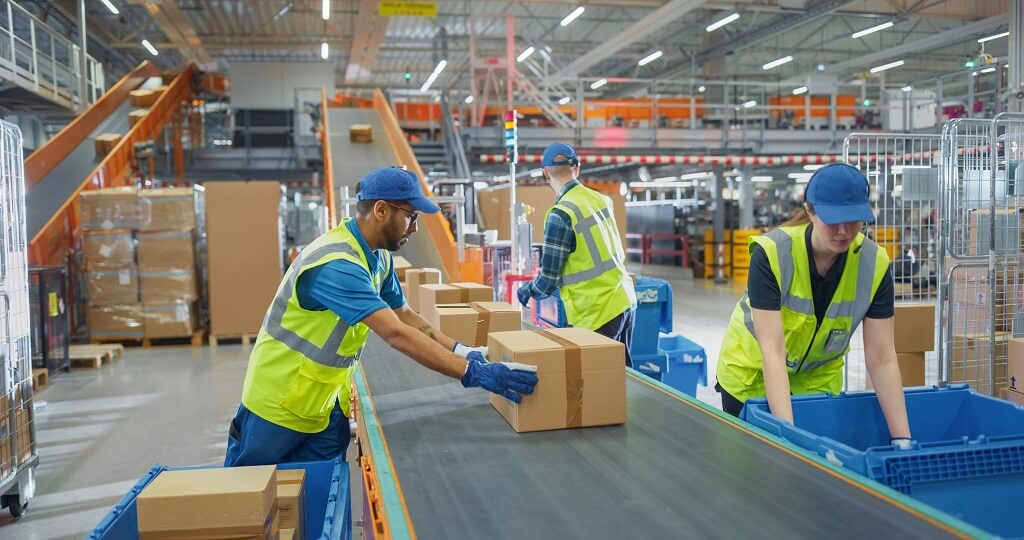
There is another reason logistics deserves more respect. It reduces management noise.
When logistics are messy, the whole company feels it. Customer support gets more tickets. Finance spends more time reconciling issues.
Marketing has to explain delays. Founders chase updates from suppliers and warehouses. Inventory planning becomes less reliable. Sales forecasting becomes harder. Team energy gets wasted on fixing preventable problems.
When logistics are strong, the opposite happens. Fewer surprises. Cleaner stock visibility. More accurate timelines. Better communication with customers. Better planning. More confidence when launching promotions or increasing order volume.
This is what makes logistics so underrated. It not only affects package movement. It affects how calm or chaotic the business feels on a daily basis.
The Best E-Commerce Brands Usually Win Through Operational Reliability
Shoppers may discover a brand because of ads, social content, influencers, or pricing. But many of the brands that keep customers over time do something more basic. They become reliable.
Reliable delivery. Reliable tracking. Reliable returns. Reliable restocks. Reliable inventory accuracy.
That reliability is built by logistics.
It is easy to underestimate this because the e-commerce world talks constantly about growth hacks, ad angles, funnel tweaks, and viral creatives. Those things matter, but they are not enough to build a durable operation. A brand becomes stronger when customers learn that ordering from it feels easy and predictable. That is not luck. That is logistics executed well.
Final Thought
Logistics is the most underrated part of e-commerce because it sits behind the curtain while controlling some of the biggest outcomes in the business. It shapes conversion through shipping cost and delivery expectations.
It shapes profitability through handling cost, inventory flow, and returns. It shapes customer trust through reliability. It shapes scalability through process discipline.
A store can survive mediocre branding longer than it can survive broken operations. It can fix weak copy faster than it can fix deeply disorganized fulfillment. And it can spend heavily on growth only for so long before logistics decides whether that growth turns into profit or pressure.