






Search Results: supreme court (1415)
Following a batch of petitions on the criminalization of marital rape, a bench of justices asked the Court why such…

Tamil Nadu’s application to cut down trees below the Mullaperiyar Baby Dam is still pending before the Supreme Court. No…
While the PM CARES appears as a state fund for people in need, the Union Government maintains that it is…
On Monday, farmers in India vowed to intensify their month-long protests against agricultural liberalization laws after clashes between farmers and…
Delhi police chief visits Rohini courtroom crime spot where three gangsters were killed during police retaliation against assailants. Delhi Police…
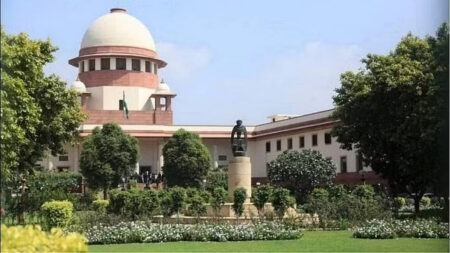
In a groundbreaking decision, the Supreme Court of India has decreed that progeny born from void or voidable marriages are eligible to inherit a portion of their parents’ assets under Hindu statutes.
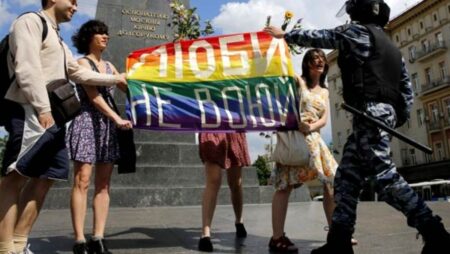
On 6th September 2018, the Supreme Court of India, ruled unanimously that section 377, of the Indian Penal Code, was unconstitutional. This Historic Judgement, which decriminalized sexual acts between consenting adults of the same sex, was hailed as a landmark decision for LGBTQ rights in India. While this monumental jurisdiction was efficient in bringing forth a vast amount of open-mindedness in regard to Gay Rights, it was not similar in all countries.
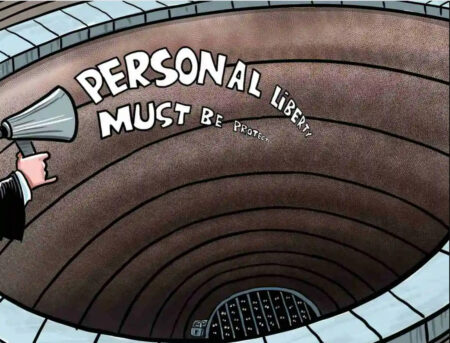
The discourse delivered by Justice Siddharth Mridul of the Delhi High Court at the Centre for Discourses on Criminal and Constitutional Jurisprudence emphasized the crucial significance of personal liberty and the principle of presumption of innocence within the framework of the criminal justice system. The discourse shed light on the evolving nature of these principles, their historical context, and their relevance in contemporary democracies.
Justice Mridul’s address commenced with the assertion that personal liberty is a cornerstone of civilization, not just a modern concept. He traced its historical evolution from conflicts between subjects and monarchs to the present-day struggles between citizens and the executive branch in democratic societies. Protecting individual liberty remains a central obligation in a thriving democracy.
The principle of presumption of innocence was highlighted as the “elixir” of the criminal justice system by Justice Mridul. He discussed its progression from being recognized as a human right by the Supreme Court to its elevation as a fundamental right in India. This presumption, he argued, is vital not only for shielding the innocent but also for upholding the integrity of the legal process.
Justice Mridul delved into the emergence of constitutional guarantees as contemporary safeguards for personal liberty against state intervention. He explained that the act of guaranteeing liberty implies a higher authority that ensures it as a special privilege. The Constitution’s role in safeguarding personal freedom from legislative actions encapsulates the essence of this guarantee.
The discourse further explored the tension between the crime control model and the due process model. While the former emphasizes punishing the guilty and may lead to wrongful convictions, the latter prioritizes the rights of the accused, even if some guilty individuals go unpunished. Justice Mridul emphasized that both models share the common goal of punishing the guilty while safeguarding the innocent.
Justice Mridul underscored that the presumption of innocence is intricately linked to the concept of bail. He acknowledged the state’s interest in preventing serious offenses but argued that traditional bail rules are sufficient to achieve this goal. These rules necessitate a comprehensive assessment of factors such as the accused’s background, the strength of the case against them, and the gravity of the offense before granting bail.
In conclusion, Justice Mridul emphasized that every accused individual, irrespective of their charges, is entitled to the presumption of innocence and the fundamental principles of fairness enshrined in Article 21 along with Article 14 of the Indian Constitution. He cautioned against treating two offenders differently with regard to the presumption of innocence, as this would violate Article 14.
Justice Siddharth Mridul’s discourse served as a poignant reminder of the vital role that personal liberty and the presumption of innocence play within the criminal justice system. His insights underscored the delicate balance that legal systems must maintain between crime control and due process models. This discourse encourages law students and legal practitioners to champion the safeguarding of fundamental rights and uphold the principles upon which modern democracies are constructed.
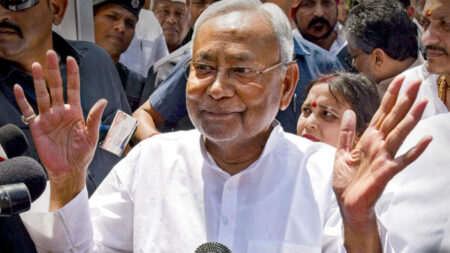
In a significant development, the Central Bureau of Investigation (CBI) has taken the step of approaching the Supreme Court with a formal request to nullify the bail granted to the prominent leader of the Rashtriya Janata Dal (RJD). The leader is linked to cases pertaining to the alleged fodder scam, a controversy that has captured national attention.
Excerpt:
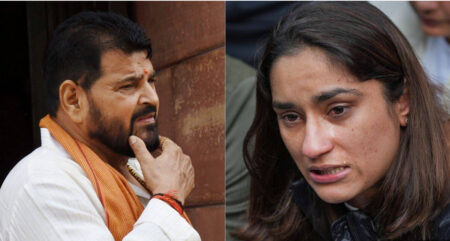
Prominent Wrestlers Accuse Brij Bhushan Singh of Sexual Harassment: Latest Updates
In a shocking turn of events, Brij Bhushan Singh, the President of the Wrestling Federation of India (WFI), finds himself at the center of serious allegations of sexual harassment. Renowned wrestlers, including Vinesh Phogat, Shakshee Mallikhh, and Bajrang Punia, have courageously stepped forward to protest against him. The accusations are grave, revealing a disturbing pattern of misconduct within the wrestling community.
According to one wrestler’s account, the accused forcefully pulled her daughter towards him, attempting to make unwelcome physical contact. However, the young girl managed to break free and escape from his clutches. In another distressing incident, while training, Singh allegedly called a wrestler aside and proceeded to inappropriately touch her, claiming it was a mere breath check. Despite her repeated resistance and efforts to push him away, Singh responded with demeaning remarks, insinuating that she was being “too smart” and questioning her commitment to future competitions.
These accusations have triggered a strong response from the wrestling community, resulting in a unified stand against Brij Bhushan Singh. Vinesh Phogat, Shakshee Mallikhh, and Bajrang Punia, among many others, have rallied together to protest against him since the beginning of the year. However, despite facing condemnation from the United World Wrestling Federation (UWW) and the imminent threat of the WFI being ousted from the Federation, no strict actions have been taken against the accused President.
One striking aspect of this case is the stark contrast in the response time between the accused and the victims. Within a mere seven hours of the horrific incident that occurred on May 28, 2024, an FIR was registered against the accused individuals. However, it took three months of relentless protests under scorching Delhi heat for the wrestlers to have their complaints acknowledged and their FIR registered, let alone initiating proper investigations.
Brij Bhushan Singh, a six-time Member of Parliament representing Uttar Pradesh, responded to the allegations by making a startling statement, suggesting that he would “hang himself” if any of the accusations were proven true. Despite his controversial background, including involvement in 38 criminal cases ranging from theft to terrorism, Singh continues to contest for the upcoming Lok Sabha elections from Kesariganj. Wrestlers who were aware of his unethical behavior chose to remain silent, fearing the repercussions he could unleash on their professional careers. Exploiting their vulnerable positions, Singh preyed on their silence, taking advantage of their disadvantaged backgrounds.
The Supreme Court of India has weighed in on the matter, closing the petition as an FIR had already been registered by the police. Former Chief Justice of India, Justice Madan B Lokur, expressed his displeasure with the police’s handling of the case, highlighting concerns over the investigation process.
As the legal proceedings unfold, it is essential to ensure a fair investigation that upholds the rights of the victims and delivers justice. The accusations against Brij Bhushan Singh shed light on a deeper problem within the wrestling community, necessitating a comprehensive examination of the existing power dynamics and a commitment to creating a safe and inclusive environment for all athletes.
