




Literary figures are no less than legit celebrities for bibliophiles. And to know something about them that has more to do with their personal life is all the more exciting.
Lewis Carroll, the author of Alice in Wonderland, was a financial disaster.
Despite paying his bills on time, he frequently overdrew up to £7,500.
Carroll was a mathematics scholar at Oxford, which makes this all the more ironic.
Literary Figures gone wrong with numeric figures!
James Joyce was such a lover of Norwegian dramatist Henrik Ibsen’s work that he learnt rudimentary Norwegian solely to write him a fan letter.
Joyce spoke French, Italian, Latin, and German in addition to Norwegian.
In his most challenging novel, Finnegan’s Wake, he even utilises vocabulary from more rare languages like Old English, Gaelic, Provençal, and Swahili.
Charles Dickens had obsessive-compulsive disorder.
Dickens combed his hair 20 times a day and would quickly change all of the furniture at hotels.
Ernest Hemingway was not only a fantastic writer; but also a professional bullfighter;
He also created his rum brand. A literary Figure with a Skill, Aye!
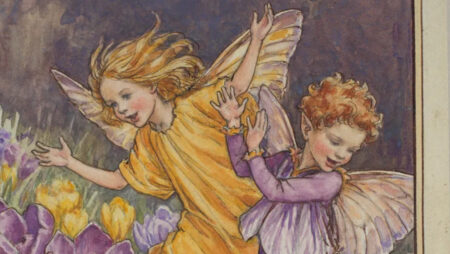
Fairies were a belief of Sir Arthur Conan Doyle. He spent $1 million advertising the Cottingley Fairy photographs. Also, in 1921, he published the book The Coming of the Fairies, which proved their veracity.
Salman Rushdie worked as a copywriter for Ogilvy & Mather before becoming a writer. He created several well-known ads, such as “naughty but nice” and “irresistibubble!”
By marriage, The renowned literary figures Virginia Woolf (author of To the Lighthouse, Mrs Dalloway, and A Room of One’s Own) and William Makepeace Thackeray (author of Vanity Fair) were related.
Minie, William’s daughter, was Virginia’s father’s first wife.
While Sylvia Plath is most known for her works Ariel and The Bell Jar, she also wrote The Bed Book, a classic collection of children’s rhymes published after her death.